


If you’re running a restaurant, café, or food delivery service in Malaysia, you’ve probably heard the buzz about switching from plastic and Styrofoam to bagasse containers. But here’s the question keeping you up at night: Is it actually worth it?
Let’s cut through the marketing fluff and look at the real numbers. This isn’t just about being “green”—it’s about understanding the true cost of eco friendly food packaging, the regulatory pressure you’re facing, and why biodegradable food packaging might actually save you money in ways you haven’t considered.
What Exactly Is Bagasse? (And Why Everyone’s Talking About It)
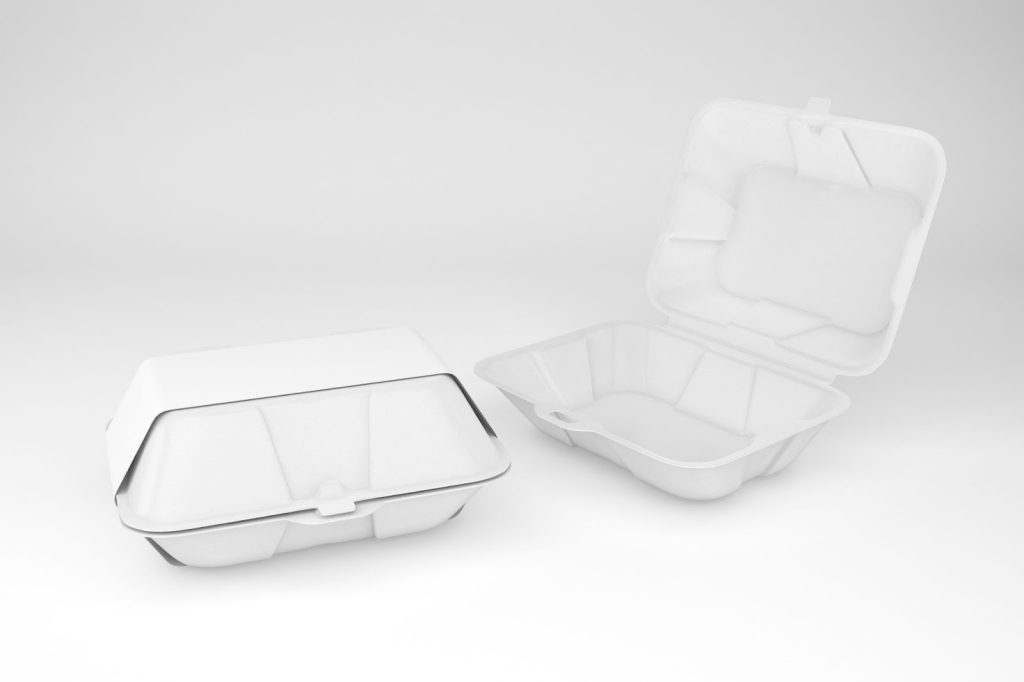
Before we dive into cost comparisons, let’s get clear on what bagasse actually is. Bagasse is the fibrous material left over after sugarcane stalks are crushed to extract juice. Instead of burning this agricultural waste, manufacturers transform it into sturdy, heat-resistant food containers.
Think of it as upcycling on an industrial scale. What was once agricultural waste becomes premium environmentally friendly food packaging that can handle everything from hot nasi lemak to oily char kway teow. According to comprehensive research, bagasse is a renewable resource that’s both biodegradable and compostable, making it an ideal sustainable alternative to conventional petroleum-based plastics.
Key Properties of Bagasse Containers
- Made from 100% sugarcane fiber (agricultural byproduct)
- Naturally heat-resistant up to 120°C
- Microwave and freezer safe
- Grease and water-resistant without plastic coating
- Fully compostable within 30-90 days in proper conditions
- Biodegrades naturally without toxic residue
The beauty of bagasse as biodegradable food packaging is that it performs like plastic but behaves like organic matter when disposed of. For Malaysian F&B businesses facing stricter plastic regulations, this matters more than ever.
The Plastic Problem: Why Malaysia Is Cracking Down
Let’s talk about why you’re even reading this article. Malaysia’s plastic regulations aren’t suggestions anymore—they’re becoming law with real consequences.
Multiple Malaysian states including Selangor, Penang, and Johor have implemented comprehensive plastic bans, with nationwide enforcement expanding by 2026. According to the KPKT Roadmap, local authorities (PBTs) have already begun linking business license renewals to plastic compliance in these states. But here’s what most F&B operators miss: these regulations are expanding beyond plastic bags to include food containers.
This isn’t about environmental activism—it’s about your ability to keep operating. Forward-thinking businesses are already transitioning to eco friendly food packaging to stay ahead of regulations rather than scrambling when enforcement hits.
The Real Cost Breakdown: Bagasse vs Plastic & Styrofoam
Now let’s get to what you actually care about: the numbers. We’ve broken down the true cost comparison across three common container types used in Malaysian F&B operations.
Direct Cost Comparison (Per Unit)
| Container Type | Unit Cost (RM) | Volume | Cost per 100 units (RM) |
| Styrofoam Container | 0.15 – 0.25 | 500ml | 15.00 – 25.00 |
| Plastic Container (PP) | 0.20 – 0.35 | 500ml | 20.00 – 35.00 |
| Bagasse Container | 0.35 – 0.55 | 500ml | 35.00 – 55.00 |
At first glance, bagasse biodegradable food packaging costs roughly 40-60% more than Styrofoam and 30-40% more than plastic. This is where most F&B operators stop their analysis—and make a costly mistake.
The Hidden Costs You’re Not Calculating
Here’s what the simple price comparison misses:
Styrofoam & Plastic Hidden Costs:
- Potential fines per violation
- Business license renewal complications
- Negative social media exposure from plastic use
- Loss of environmentally conscious customers
- Decreasing availability as manufacturers shift production
- Higher disposal fees for non-recyclable materials
Bagasse Benefits Beyond Price:
- Premium positioning opportunity and marketing value
- Zero compliance risk as regulations expand
- No forced transition costs later
- Superior heat retention for hot foods
- Microwave-safe for customer convenience
- Stackable and space-efficient storage
When you factor in these elements, the true cost gap between biodegradable food packaging and conventional options narrows significantly—and in many scenarios, bagasse becomes the more economical choice.
Performance Comparison: Does Bagasse Actually Work?
Cost means nothing if the packaging fails. Malaysian F&B operators need eco friendly food packaging that can handle diverse cuisines—from soupy laksa to greasy nasi kandar.
Real-World Performance Testing
| Performance Factor | Styrofoam | Plastic (PP) | Bagasse |
| Heat Resistance | Good (up to 100°C) | Excellent (up to 120°C) | Excellent (up to 120°C) |
| Grease Resistance | Poor (absorbs oil) | Excellent | Excellent (naturally resistant) |
| Structural Integrity | Moderate (crushes easily) | Excellent | Excellent (rigid fiber structure) |
| Microwave Safe | No (releases toxins) | Some varieties | Yes (fully safe) |
| Leak Prevention | Moderate | Excellent | Good to Excellent with proper design |
The performance data reveals something surprising: bagasse biodegradable food packaging actually outperforms Styrofoam in most categories and matches plastic in critical areas. Research shows that bagasse containers maintain structural integrity and are suitable for both hot and cold food applications.
Malaysian Cuisine Suitability
Let’s get specific about how environmentally friendly food packaging made from bagasse handles actual Malaysian dishes:
Excellent Performance:
- Nasi lemak with sambal (heat + oil resistance)
- Char kway teow (high heat + grease)
- Roti canai with curry (moisture + temperature)
- Fried rice dishes (heat retention)
- Grilled meats and satay (grease resistance)
Good Performance (with proper container selection):
- Soup-based dishes like laksa (requires proper sealing)
- Curry-heavy meals (needs appropriate depth)
- Wet noodle dishes (select containers with reinforced bases)
Environmental Impact: The Numbers That Matter
Let’s talk about the environmental side—not because it’s trendy, but because it’s increasingly affecting your bottom line through regulations and customer preferences.
Carbon Footprint Comparison
| Packaging Type | Production CO2 (kg per 1000 units) | Decomposition Time | End-of-Life Impact |
| Styrofoam | 3.5 – 4.2 kg | 500+ years | Microplastic pollution, never fully decomposes |
| Plastic (PP) | 2.8 – 3.5 kg | 20-30 years | Microplastic pollution, requires recycling infrastructure |
| Bagasse | 1.2 – 1.8 kg | 30-90 days | Becomes compost, enriches soil, zero pollution |
Studies show that bagasse containers have a 50-70% lower overall environmental impact than single-use plastic containers when considering factors like production, transportation, and disposal. The US EPA confirms that plastic can take up to thousands of years to decompose, depending on environmental conditions, and fragments into microplastics that persist in the environment.
The environmental advantage of biodegradable food packaging isn’t just theoretical—it translates to real business value as Malaysia implements environmental regulations and customers increasingly choose sustainable businesses.
The Composting Reality
Here’s an important clarification: bagasse is compostable, but it requires proper conditions. In commercial composting facilities, bagasse environmentally friendly food packaging breaks down within 30-60 days. In home composting, it takes 60-90 days.
Composting Requirements:
- Adequate moisture levels
- Proper temperature (55-70°C for commercial composting)
- Oxygen circulation
- Microbial activity
While Malaysia’s composting infrastructure is still developing, the key advantage is that bagasse can decompose naturally, unlike plastic which persists for decades regardless of disposal method.
Cost Management Strategies: Making Bagasse Affordable
So how do successful Malaysian F&B businesses make the transition to eco friendly food packaging without breaking the bank? Here are proven strategies:
1. Strategic Volume Purchasing
Bulk ordering dramatically reduces per-unit costs for biodegradable food packaging:
Volume Discount Structure:
1,000 units: Standard pricing (RM 0.55 per unit)
- 5,000 units: 15-20% discount (RM 0.44-0.47 per unit)
- 10,000+ units: 25-30% discount (RM 0.39-0.41 per unit)
For multi-location operations, consolidated purchasing across outlets can achieve these volume thresholds quickly.
2. Menu-Specific Container Selection
Not every dish needs premium environmentally friendly food packaging. Strategic selection optimizes costs:
- High-Value Items: Use premium bagasse containers with windows or custom printing
- Standard Items: Use basic bagasse containers without embellishments
- Dry Items: Consider paper-based alternatives (even more economical)
- Soup-Based Items: Invest in reinforced bagasse with proper sealing
This tiered approach balances cost with performance across your menu.
3. Customer Communication Strategy
Transparency about your transition to biodegradable food packaging can actually justify slight price adjustments. Research on Malaysian consumers’ preferences shows significant willingness to pay for sustainable packaging, particularly among Generation Y and Z in urban areas like Klang Valley.
Effective Communication Approaches:
- “We’ve switched to compostable containers to support Malaysia’s environmental goals”
- Menu notes explaining sustainable packaging commitment
- Social media content showcasing eco friendly food packaging benefits
- In-store signage highlighting environmental impact reduction
The studies indicate that a majority of consumers give positive responses towards their willingness to participate and pay for more environmentally friendly packaging options.
Addressing Common Concerns About Bagasse Packaging
Let’s tackle the objections we hear most frequently from Malaysian F&B operators:
“Bagasse containers get soggy with wet foods”
- Modern bagasse biodegradable food packaging is engineered with natural water and grease resistance. Research confirms that bagasse containers maintain structural integrity even with moisture-heavy applications.
“Customers won’t notice or care”
- Consumer awareness of plastic pollution is at an all-time high in Malaysia. Research shows significant willingness among Malaysian consumers to pay for sustainable packaging, particularly in urban areas.
“Supply chain will be unreliable”
- Established suppliers like FELSi have robust supply chains specifically designed for the Malaysian market with consistent availability.
“It’s too expensive for my margins”
- Direct cost is higher, but total business impact can be neutral or positive through volume purchasing, strategic pricing, customer acquisition, and avoided regulatory costs.
FELSi’s Bagasse Solutions: What’s Actually Available
Let’s get practical. What biodegradable food packaging options can Malaysian F&B businesses actually source right now?
FELSi’s Eco Friendly Food Packaging Range
FELSi offers comprehensive eco friendly food packaging solutions specifically designed for Malaysian F&B operations:
| Product Category | Available Options | Key Applications |
| Paper Containers | Various sizes, grease-resistant, microwave-safe | Noodles, rice dishes, hot meals |
| Cups & Accessories | Paper cups, PLA cups, matching lids | Hot/cold beverages, soups, desserts |
| Bagasse Products | Containers, plates, bowls, compartment boxes | Takeaway meals, catering, food courts |
| Kraft Paper & Corrugated Board | Food-grade kraft boxes, pizza boxes, corrugated containers | Pizza delivery, bakery items, large orders |
| Cutlery | Wooden spoons, forks, knives, bamboo chopsticks | Dine-in and takeaway utensils |
| Window Containers | Paper boxes with transparent PLA windows | Bakery displays, sandwiches, salads |
| Paper Bags | Multiple sizes, custom printing, strong handles | Takeaway orders, delivery packaging |
FELSi offers a complete range of eco friendly food packaging solutions. Our bagasse products are made from 100% sugarcane fiber, while our broader range includes paper, PLA (plant-based plastic), and natural wood materials—all meeting Malaysian food safety standards. Bagasse has a significantly shorter harvest period (12-18 months) compared to traditional forestry products, resulting in lower environmental impact.
Quality Assurance Standards
What sets premium biodegradable food packaging apart from cheap alternatives?
FELSi Quality Commitments:
- Sourced from certified sustainable sugarcane suppliers
- Production meets international food contact material standards
- Consistent quality across batches (critical for multi-location operations)
- Rigorous performance testing for Malaysian climate conditions
Why FELSi for Your Biodegradable Food Packaging Needs?
As Malaysia’s F&B industry navigates this critical transition, choosing the right eco friendly food packaging partner makes all the difference.
FELSi’s Unique Value Proposition:
- Comprehensive biodegradable food packaging solutions across all F&B needs
- Deep understanding of Malaysian F&B requirements and cuisine needs
- All environmentally friendly food packaging meets international food safety standards
- Established logistics network ensuring consistent availability
- Dedicated customer service team providing ongoing support
- Volume discounts and transparent pricing structure
Taking Action: Your Next Steps
You’ve seen the numbers. You understand the regulatory pressure. You know the performance capabilities of eco friendly food packaging. Now what?
Immediate Actions (This Week)
- Calculate your current packaging costs across all menu items
- Research your state’s specific plastic regulations
- Contact FELSi to discuss your specific biodegradable food packaging needs
- Request samples of appropriate bagasse containers
- Test products with your actual dishes
Short-Term Goals (This Month)
- Develop transition plan with timeline and budget
- Identify pilot menu items for initial environmentally friendly food packaging implementation
- Place first order with appropriate volume
- Create customer communication strategy
- Train staff on new packaging handling
The Bottom Line: Bagasse Is the Smart Business Choice
Let’s bring this full circle. Is bagasse biodegradable food packaging worth the investment for Malaysian F&B businesses?
The answer is yes—but not just for environmental reasons.
When you account for regulatory compliance, brand positioning, customer acquisition, premium pricing justification, supply chain stability, and competitive differentiation, the total business case for eco-friendly food packaging becomes compelling.
Malaysia’s plastic ban isn’t going away. Regulations will only tighten. Consumer preferences will continue shifting toward sustainability. The question isn’t whether to transition to environmentally friendly food packaging, but when and how.
Businesses that act now gain first-mover advantages, avoid rushed transitions, and position themselves as industry leaders. Those who delay face regulatory pressure, competitive disadvantage, and forced changes under less favourable conditions.
The transition to biodegradable food packaging starts with a single step. Contact FELSi today to begin your journey toward sustainable, compliant, and profitable food packaging solutions.