


If you walk through the bustling streets of Kuala Lumpur, Penang, or Johor Bahru, you will notice the “bungkus” (takeaway) culture is practically a way of life. But here is the thing—Malaysia is serious about phasing out single-use plastics by 2025 under the Roadmap Towards Zero Single-Use Plastics. That means businesses need real alternatives, and fast.
That is where bagasse containers (also called sugarcane containers) come in.
If you run a restaurant, cloud kitchen, or event planning business and want to go green, you have probably heard these two terms floating around. This article will walk you through what they actually are, why they beat plastic every time, and how switching to them can make your brand look good in front of increasingly eco-aware Malaysian customers.
What Are Bagasse Containers? (And Yes, They Are the Same as Sugarcane)
Let us clear up the confusion right now. Bagasse containers and sugarcane containers are exactly the same product. There is no difference.
Bagasse is simply the dry, pulpy fiber left behind after sugarcane stalks have been squeezed for their juice. Traditionally, this fiber was burned as waste, which actually caused air pollution. But now, clever people figured out how to turn that waste into something useful—sustainable food packaging.
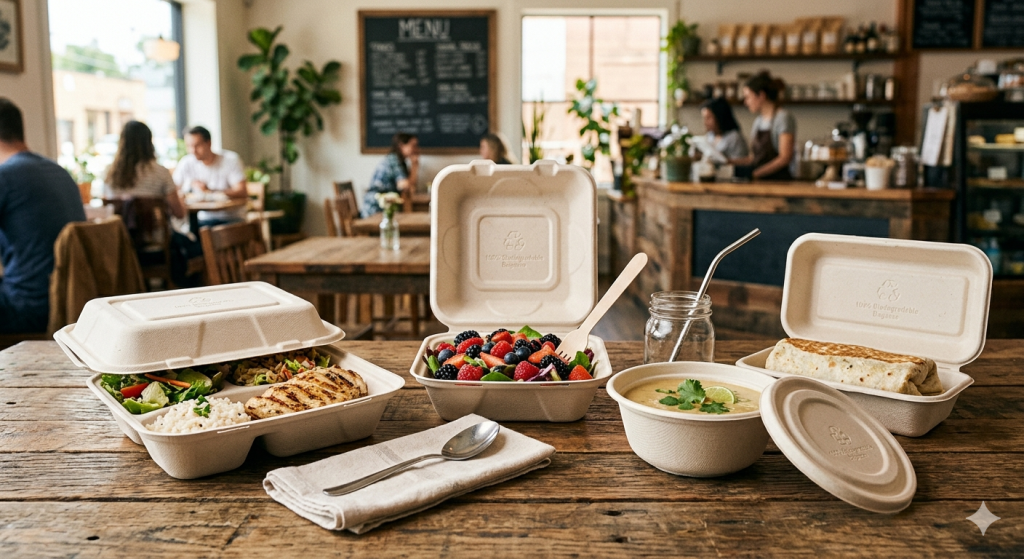
You have probably seen them before. Clamshell takeaway boxes, compartment trays for nasi lemak or mixed rice, bowls for noodles, plates for pasar malam snacks. All of these can be made from sugarcane fiber.
How Are Sugarcane Containers Made?
The process is surprisingly simple and satisfying.
After the sugarcane juice is extracted, the leftover fibrous pulp (bagasse) is collected. That pulp gets mixed with water to create a wet, mushy slurry. Then, high-temperature molds shape that slurry into containers. Heat sterilizes everything, so there are no bacteria or germs. Finally, they go through quality control.
Compare that to plastic, which comes from fossil fuels and requires all sorts of chemical treatments. Bagasse is just plant fiber and water. That is it.
Key Benefits of Bagasse Containers
Why Malaysian Businesses Are Switching to Bagasse Containers? Let us talk about the real, practical benefits for a Malaysian F&B owner.
Heat & Oil Resistance (Curry & Gravy Approved!)
Unlike paper boxes that go soggy, sugarcane containers handle hot, oily Malaysian curries (Fish Head Curry, Rendang) without leaking or collapsing.
Microwave & Freezer Safe
Your customers can reheat their leftovers without swapping containers. It withstands temperatures from -10°C to 120°C.
100% Non-Toxic & Plastic-Free
No wax lining. No PFAS (forever chemicals) found in some recycled paper boxes. Just pure plant fiber.
Compostable & Biodegradable
While plastic takes 500+ years to decompose, bagasse breaks down in 60–90 days in a home compost or industrial facility.
Enhances Brand Image
Malaysian consumers (especially Gen Z and urban professionals) actively boycott plastic. Using green packaging on GrabFood or Foodpanda increases customer loyalty.
The Environmental Impact Beyond Just Being “Eco-Friendly”
Switching to sugarcane containers actually solves multiple problems at once.
First, it reduces agricultural waste. That pile of leftover sugarcane fiber would otherwise be burned or dumped. One ton of bagasse used for packaging means one ton of waste avoided.
Second, it saves forests. Paper packaging requires cutting down trees. Bagasse uses waste fiber from an existing crop. No deforestation required.
Third, the carbon footprint is tiny. Manufacturing bagasse containers produces ninety-seven percent less CO2 compared to virgin plastic.
For Malaysia, where landfills are filling up and flooding is a recurring nightmare, shifting to compostable packaging takes real pressure off our waste management systems.
How Bagasse Compares to Other Materials
Comparison: Bagasse vs. Other Materials
| Feature | Bagasse Containers | Plastic (PP/PET) | Paperboard | PLA (Corn Plastic) |
| Oil Resistance | ✅ Excellent | ✅ Good | ❌ Poor (needs plastic lining) | ✅ Good |
| Compostable at home? | ✅ Yes (60-90 days) | ❌ No (500+ years) | ⚠️ Only if unlined | ❌ No (needs industrial heat) |
| Microwave Safe | ✅ Yes | ⚠️ Leaches chemicals | ✅ Yes | ❌ No (melts) |
| Source | Waste product | Fossil fuels | Trees | Corn (food source) |
Winner for Malaysia: Bagasse wins for wet, hot, and oily local cuisine.
Let us be honest about how bagasse stacks up against the alternatives.
Plastic containers are cheap and strong, but they never decompose. They also leach chemicals when heated with oily food. Paper boxes look nice and natural, but they fail the moment you put curry or sambal in them. PLA (corn plastic) sounds eco-friendly, but it actually needs industrial composting facilities to break down—which Malaysia has very few of. Plus, PLA melts in the microwave.
Bagasse handles hot, oily, wet food. It decomposes in a backyard compost. It microwaves safely. And it comes from waste, not from food crops or forests. For Malaysian cuisine, it is simply the best fit.
What Certifications Should You Look For?
Greenwashing is real. Some sellers on Shopee or Lazada claim their boxes are eco-friendly, but they actually contain hidden plastic binders.
To avoid “greenwashing,” ensure your sugarcane containers have these logos:
- OK Compost HOME (Breaks down in your backyard).
- EN13432 / ASTM D6400 (Industrial compostability standards).
- FDA Approved (Safe for food contact).
- BPI Certified (Biodegradable Products Institute).
If a Malaysian supplier cannot show you lab test reports, walk away.
Common Uses Across Malaysian Industries
You will find sugarcane containers everywhere now. F&B delivery for nasi kandar, chap fan, noodles, and fried chicken. Catering for wedding buffets and corporate lunches. Bakeries using them for cakes and pastries because the non-stick surface works beautifully. Even hospitals and airlines use them for litter-free meal trays.
How to Choose Quality Bagasse Containers
If you are sourcing for your business, here is what you should do.
Smell the container. Pure bagasse smells like paper or wood. If you smell chemicals or plastic, there are additives inside.
Pour boiling water into one and leave it for two hours. A quality container will not leak or go soft.
Look at the colour. Natural bagasse is light brown or beige. If it is bright white, it has probably been bleached with chlorine.
Ask about bulk discounts. For Malaysian businesses, buying five hundred to a thousand pieces at once usually brings the price down to around thirty to eighty sen per box.
Check where the stock is. A supplier with inventory in a Selangor or Johor Bahru warehouse is far more reliable than waiting weeks for a shipment from China.
The Real Challenges (Because Nothing Is Perfect)
Let us be upfront about the downsides.
Cost is the biggest hurdle. Bagasse containers are usually twenty to thirty percent more expensive than plastic. That could be fifty sen versus fifteen sen per box. But here is a practical solution—add a “green surcharge” of twenty sen on delivery apps. Most customers happily pay it.
Storage matters. Bagasse absorbs moisture from the air. Keep your boxes in a dry, cool area, not a humid kitchen or near a steamer.
Disposal is not perfect. While bagasse is compostable, most Malaysian landfills lack the oxygen and heat for rapid composting. Still, even in a landfill, it breaks down much faster than plastic.
What Is Coming Next in Malaysia
The government is moving fast. Selangor and Penang are already aggressively banning plastic bags and styrofoam. Expect this to spread nationwide within a year or two.
New materials are emerging too. Some manufacturers are blending bagasse with bamboo or palm fiber to make containers even stronger. Custom printing with soy-based inks is also getting cheaper, so smaller brands can put their logos on eco-friendly boxes without breaking the bank.
Final Thoughts
Look, bagasse containers and sugarcane containers aren’t just another eco-trend that will fade away next year. They are already replacing plastic and styrofoam across Malaysia, from busy hawker stalls in Penang to cloud kitchens in PJ.
And here is the truth. Your customers—whether they are ordering nasi lemak at 8 AM or cendol at 3 PM—are paying attention. They want to support sellers who care about the environment. Switching to sugarcane packaging is one of the cheapest, fastest ways to build trust and loyalty with modern Malaysian consumers.
But we know the struggle. Finding reliable suppliers, comparing prices, and verifying which containers are actually compostable and heat-resistant takes time. That is exactly why Felsi.co exists.
We have already done the hard work for you. Every bagasse and sugarcane container listed on our platform is vetted for quality, certifications, and food safety. No greenwashing. No hidden plastic binders. Just real, sustainable packaging that handles your rendang, curry, and hot gravy without leaking.
So do not just read about sustainable packaging. Start using it.
Browse the best deals on bagasse and sugarcane containers at [Felsi.co] today. Compare suppliers, order samples, and make the switch—without the headache.
Q1: Are sugarcane containers safe for hot curry?
A: Yes. Bagasse is naturally heat-resistant and oil-proof, making it perfect for Malaysian wet dishes.
Q2: Can I put sugarcane containers in the microwave?
A: Yes, most are microwave-safe for up to 2-3 minutes. However, avoid heating pure oil/ghee directly.
Q3: Are bagasse containers more expensive than plastic in Malaysia?
A: Yes, slightly (10-30 sen more per unit). However, bulk ordering from platforms like Felsi.co reduces the gap significantly.
Q4: How long does it take for a sugarcane container to decompose?
A: In a home compost, roughly 60-90 days. In a landfill, it still breaks down faster than paper or plastic (approx. 1-2 years).
Q5: Is “Bagasse” the same as “Sugarcane”?
A: Yes. Bagasse is the material; sugarcane is the plant source. The terms are used interchangeably in the packaging industry.
Q6: Do these containers get soggy?
A: No. Unlike paper, bagasse is naturally water-resistant. It will soften after 6+ hours of contact, but for standard takeaway times (1-2 hours), it remains sturdy.